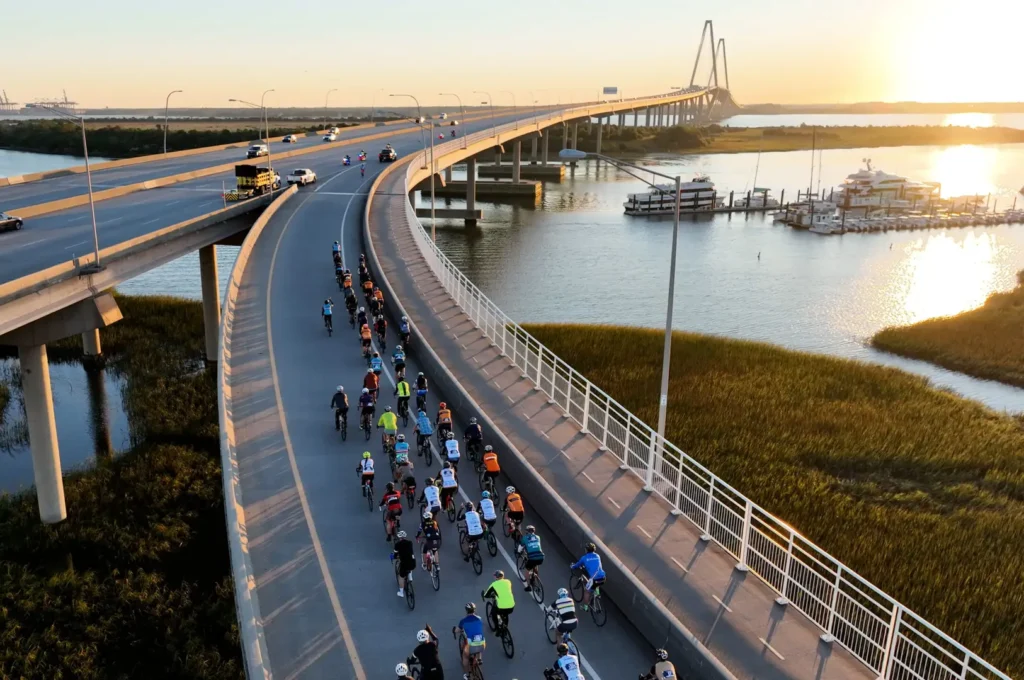
Carrying on their father’s legacy: Siblings team up to take on LOWVELO
Kristin Lee | May 6, 2026
Marty Perlmutter wasn’t one for modern medicine. If his kids Jacob, Estee, Aaron or Daniel were sick, his prescription was simple: get outside, breathe in some fresh air, soak up some sun.
“He thought those things were curative our whole life,” said Jacob. “If you broke your arm, you know, go swim in the ocean or something like that.”
That’s what makes it even more ironic that Marty was one of the first patients at MUSC Hollings Cancer Center to receive CAR-T cell therapy – an innovative immunotherapy on track to revolutionize cancer treatment.
He was, perhaps, less trusting – or at least more curious – than the average person about the medicine that became part of his life for more than a decade.
“You couldn’t tell him anything without him going home to do his own research and look it up himself,” remembered Jacob. “And he found his way into some different studies that way, and ultimately, he settled with CAR-T cell therapy despite knowing what limits there were to know about it at the time.”
Marty, who was diagnosed with chronic lymphocytic leukemia (CLL), a slow-growing cancer of the blood and bone marrow, went through many treatments before finding CAR-T. He took part in a clinical trial of ibrutinib at the National Institutes of Health. Ibrutinib is a drug that’s now commonly used to treat B-cell cancers like CLL. It works by blocking the signals that cause cancer cells to multiply.
This worked for Marty for many years until he developed a Richter’s transformation, a rare complication in which CLL evolves into an aggressive lymphoma. The shift forced him to begin more traditional chemotherapy. When that treatment eventually stopped working, his oncologist Brian Hess, M.D., introduced the possibility of CAR-T cell therapy. Hess was excited about the potential for his patients, and Marty became one of the first to receive it at MUSC – something he took great pride in.
CAR-T cell therapy begins with a blood draw from the patient. From that sample, immune cells are isolated, reengineered in a lab, and multiplied so they can better recognize and attack cancer. Those enhanced cells are then infused back into the patient. When the treatment is successful, CAR-T cells continue to grow and actively seek out and destroy cancer cells.
Marty’s children remember him proudly telling people that he was a “genetically modified organism.”
“His line was always ‘I need to just hang on until the next treatment is approved,’” said his daughter Estee. “So, with the CAR-T, he was able to hang on, and it kept him healthy for some time after.”
Shortly before he turned 80 years old, and about a decade after his original diagnosis, it all became too much for his body. He died surrounded by his family.
“He really went out with grace – in a way that I think people want to go out with grace but oftentimes struggle with that ability,” said Daniel. “It really seemed to come naturally to him – to really just enjoy each day being outside, being with family, being around people that cared for him.”
That time brought the whole Perlmutter family even closer together and in new ways.
“Our whole childhood, my dad was typically the one preparing meals and doing most of the traditional caregiving roles,” remembered Estee. “When he was sick, our mom, Jeri, needed to step up and take care of him – and she did it beautifully.”
As did the whole family, stepping out of their comfort zones to care for Marty – even in ways they didn’t understand.
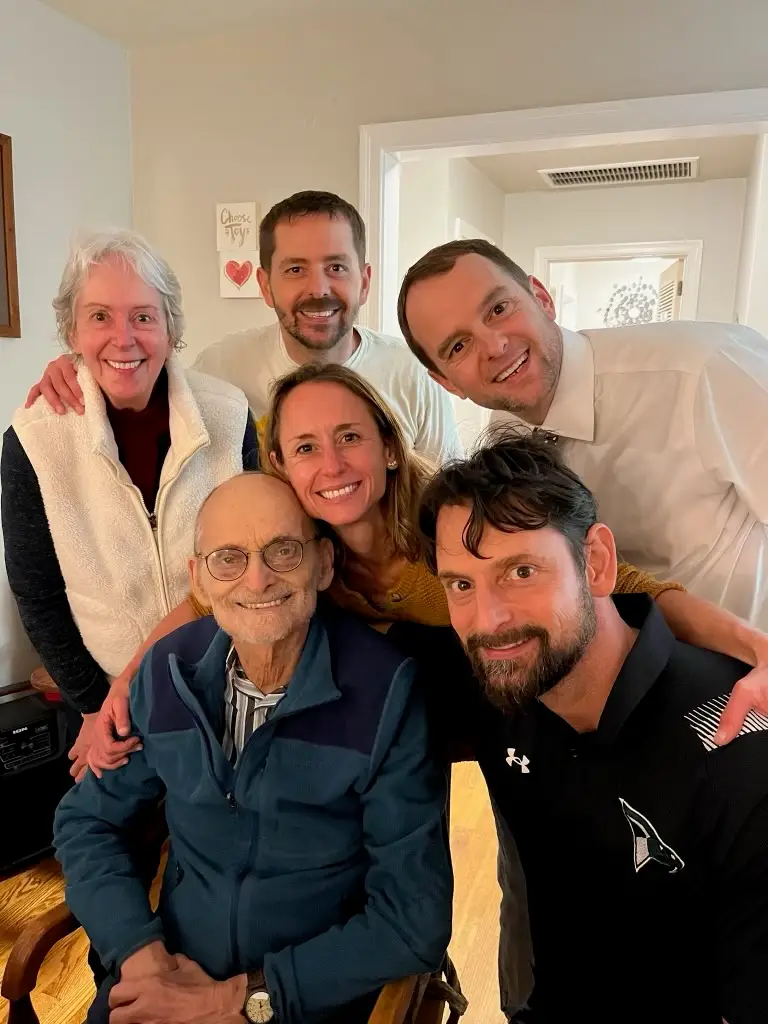
“He was obsessed with eating tuna casserole. So, whoever was out at the house visiting him, that was their responsibility – to fix tuna casserole, which is utterly disgusting,” Estee said with a laugh. “You would think with chemo and not having much of an appetite that tuna casserole would be the last thing you wanted. But that’s what sustained him for a couple months.”
Leaving a legacy
All four of Marty’s children remember their father as someone who made them each feel special individually and as someone who was deeply committed to his community.
“I think we’re all proud to have come from him,” said Aaron. “We would joke because he would talk to us all regularly – every couple days – and we all felt really kind of special and important. Then we found out later that he did that with half the town! People just loved him. He was full of personality and had a great sense of humor and we’re just very fortunate.”
Estee echoed that sentiment, describing their father as “larger than life.”
“He had a big personality, charming, just incredibly sincere,” she said. “He offered advice to everyone – even when it was unsolicited. He was committed to our family and he was just really committed to building community.”
He wasn’t just a legend to his kids – Marty became a legend to people all over Charleston. After moving here in 1979 with Jeri, he quickly became a pillar of the Jewish community. He helped to shape generations of students as the founding director of the Jewish Studies program at the College of Charleston, and his presence was felt in synagogues across the city.
That deep commitment to community is exactly what made his involvement in CAR-T therapy at MUSC feel so natural. For him, it wasn’t just a cutting edge therapy – it was a chance to give back to the city that had become his home. By participating in CAR-T, a treatment that could transform the future for cancer patients, he found a meaningful way to support the community he felt so close to.
“I think he also really cared passionately that his life was defined by what he did living, not dying,” said Daniel. “He really didn’t want the treatments to define him. He was much more focused on what he did during his life, and I think that goes back to that community mindset.”
Paying it forward
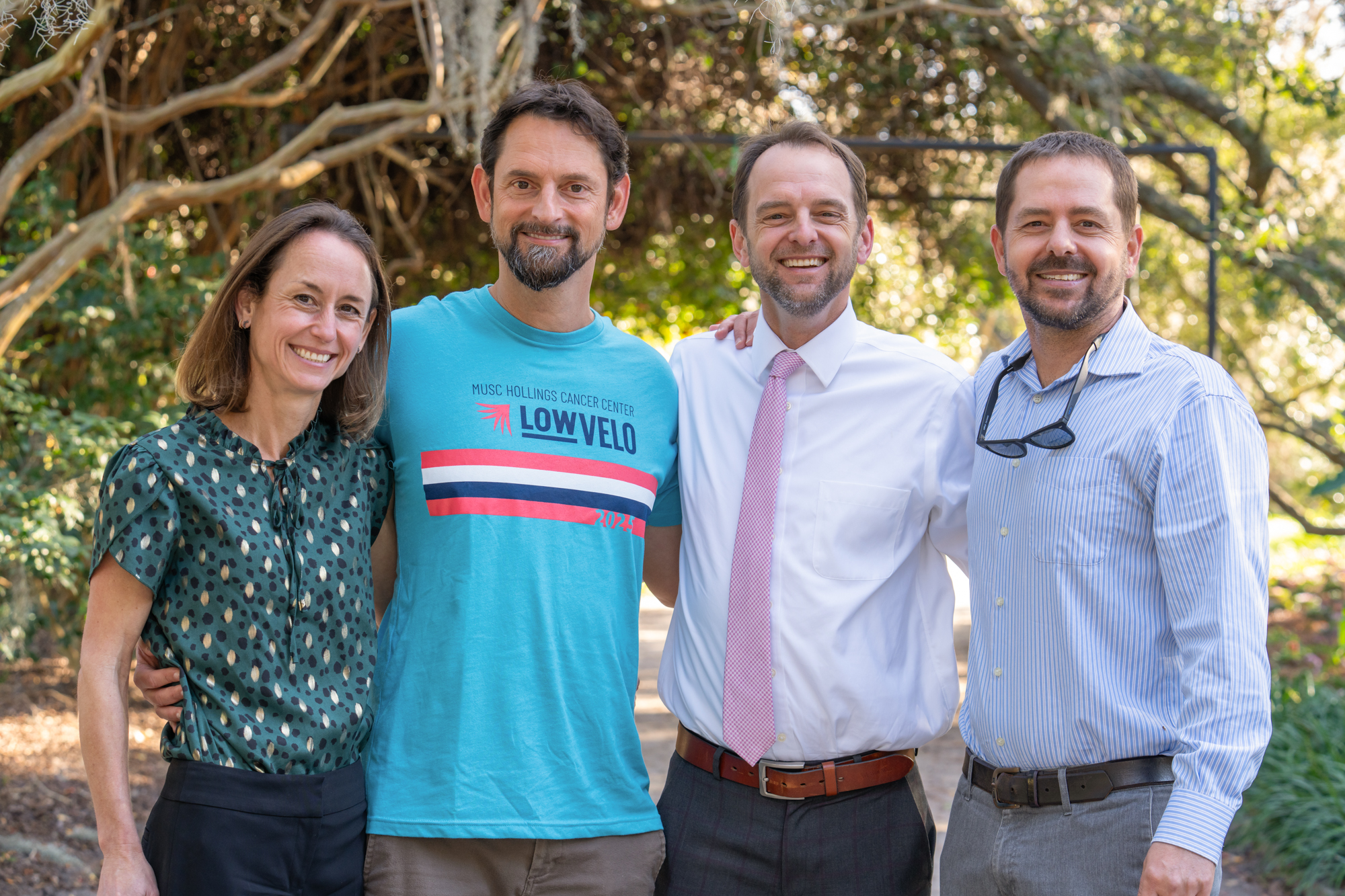
It’s a mindset his children have all carried forward. In 2025, the foursome rode in LOWVELO to honor their father and give back to the community that supported him through treatment. In fact, LOWVELO riders helped to fund a CAR-T clinical trial at Hollings that builds upon the success of previous CAR-T protocols – creating a treatment regimen that so far has been longer lasting, with fewer side effects, than the treatment Perlmutter received.
So, just as it was second nature for him to give back, it became second nature for his children to join the LOWVELO family – riding in his honor and helping to fund the cures of tomorrow.
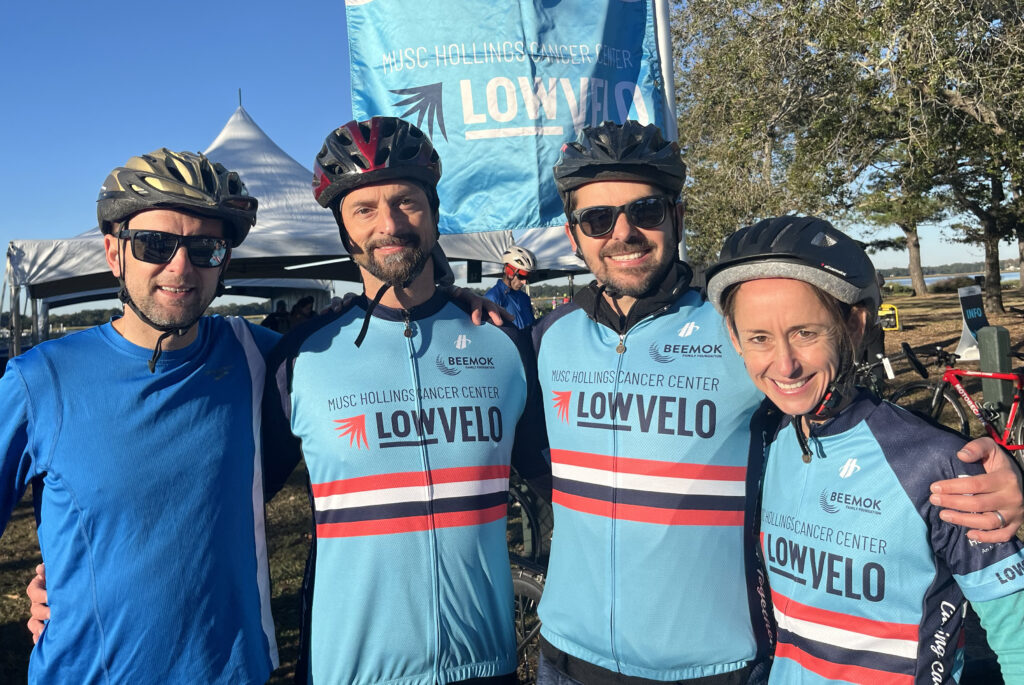
“The fact that it’s local, I think would have meant a lot to my dad. He felt like this was something he was a part of right here in Charleston. I imagine if he had his choice, he might have been a part of it in a different way,” said Jacob with a chuckle. “But he was proud that MUSC was here in Charleston doing this work and it’s something that we shouldn’t take for granted and should support in any way that we can.”
Always up for a challenge, the whole Perlmutter family has taken part in road races and events all around town since they were kids. It was something they did with their dad and a part of who the Perlmutters are as a family. Since their dad passed away, the whole family gathers on his birthday for a relay between houses. They know it’s something he would have loved being part of. And that’s exactly what drew them to LOWVELO.
“He’d be super proud,” said Aaron. “Even if he couldn’t hop on a bike, he would have been there to cheer us on and for the celebration at the end.”
The Perlmutters plan to ride again in LOWVELO26, which is set for Nov. 7. This time, more of their family, and even some of their young children, want to hop on bicycles and be part of the fun – and of course, it will give them all another opportunity to celebrate that man they all looked up to.
“I think everyone knows someone that’s been impacted by cancer and oftentimes you find yourself wondering what to do,” said Daniel. “And this is just an easy, fun way to show support – to go out and bike with a bunch of friends and community.”